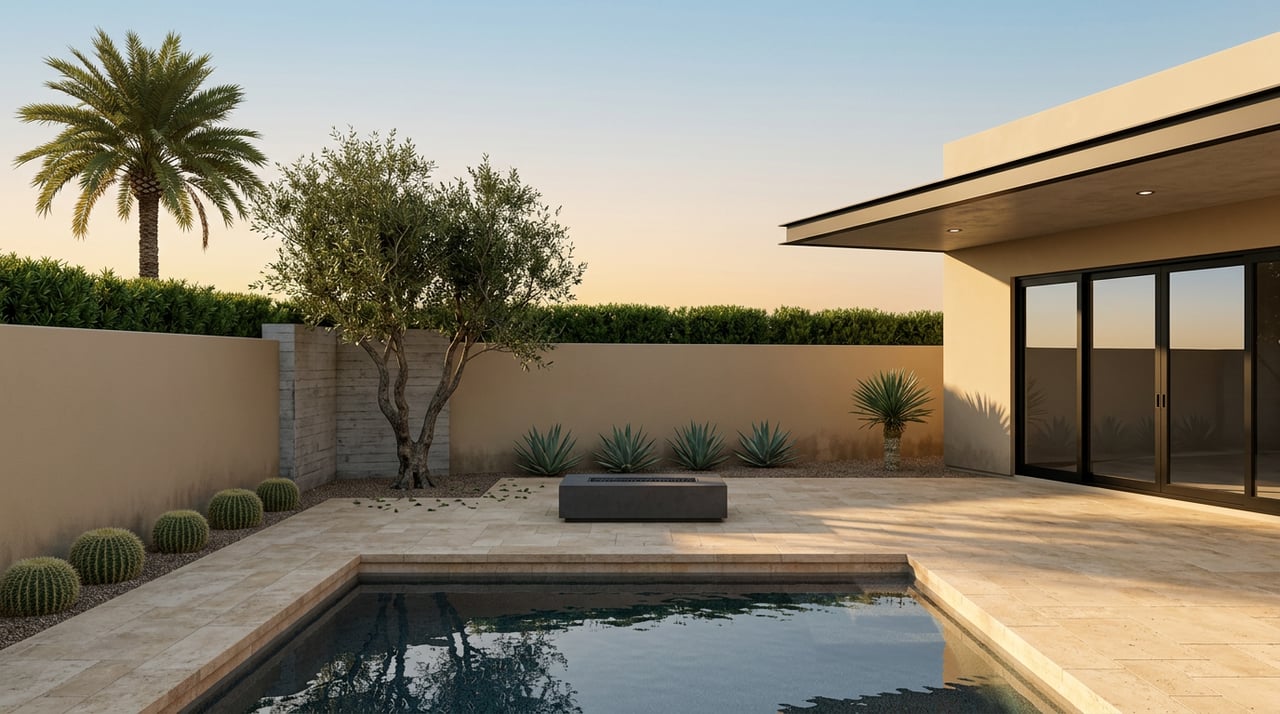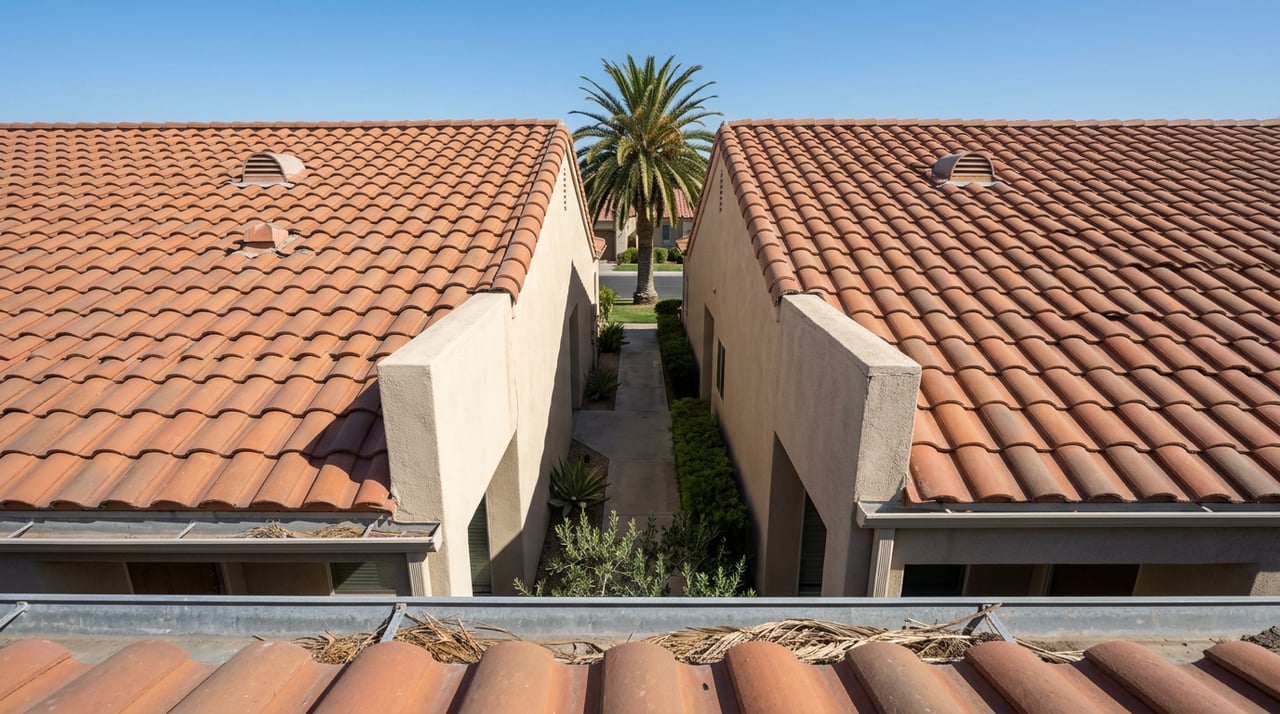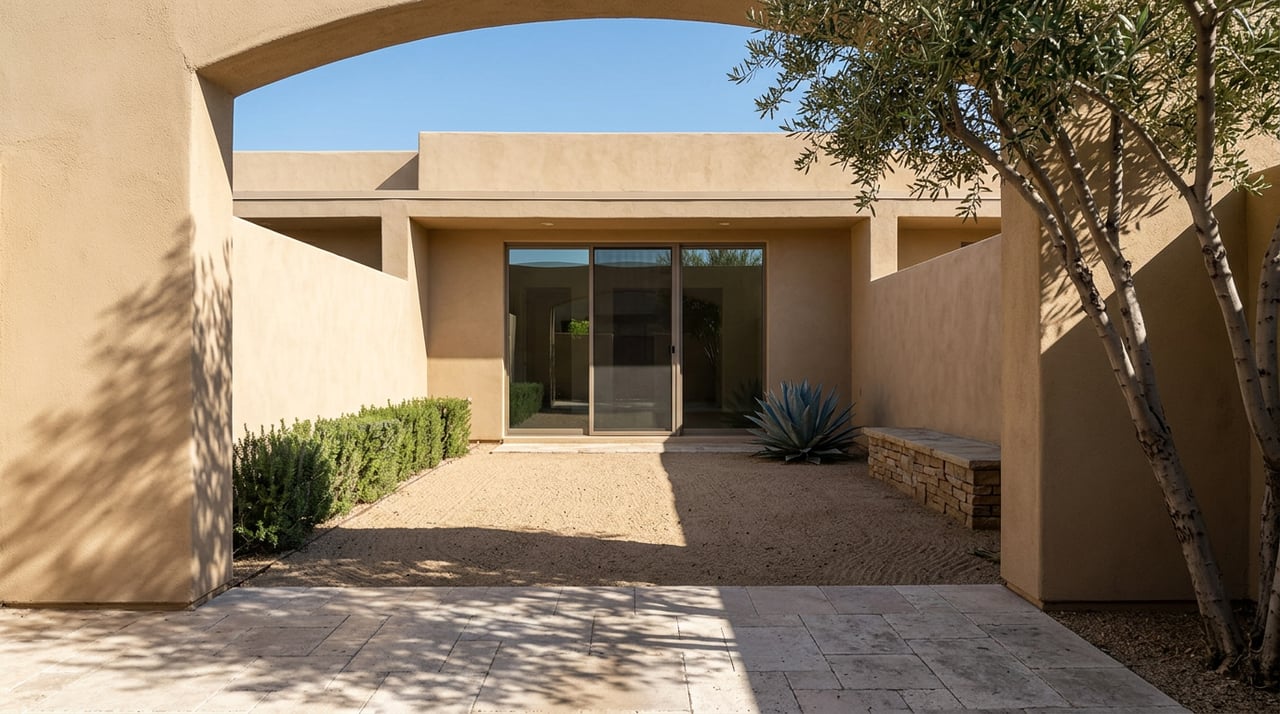
Two one-bedroom units at Mountain Cove, the guard-gated community tucked against the Point Happy foothills in Indian Wells, can carry nearly identical square footage and sit a few doors apart, yet list for wildly different prices. One might ask $295,000. Another, similar in layout and finish level, might ask closer to $650,000 with a full renovation. The difference is not always the granite or the view. Often it comes down to something that never makes the headline of the listing: what kind of land the unit sits on, and which of Mountain Cove's several small homeowners associations collects the dues.
That distinction matters more than square footage or year built if you are trying to figure out what a Mountain Cove purchase actually costs, how it will finance, and how easily you could sell it later.
The Variable Nobody Leads With
Mountain Cove was built between 1970 and 1982, and the roughly 186 homes and condos in the community sit on a mix of fee-simple and leased land. Fee-simple means you own the ground under the unit outright. Leased land means the ground itself belongs to someone else, in this case tied to an Indian land lease that runs through 2069, with a current annual lease payment reported around $3,840.
That lease payment sits on top of your mortgage, your property taxes, and your HOA dues. It does not show up in the list price, and it rarely shows up in the photos. A buyer comparing two listings side by side on price per square foot alone is missing the line item that explains why one unit is cheaper to buy and more expensive to carry, while the other is the reverse.
A recent Mountain Cove listing made the distinction explicit in its own marketing: a one-bedroom unit at 78250 Cortez Lane was advertised specifically as sitting on true fee-simple land, no lease, under an association called Clubview HOA. That kind of callout only shows up when fee-simple ownership is the exception rather than the rule in a given building, which tells you something about how the rest of the community is structured.
Same Gate, Different Associations
Mountain Cove is not governed by a single HOA. It operates as several smaller associations under one guard-gated address, and dues across them currently range from about $265 to $657 a month depending on which building and association a unit belongs to. Some of that spread reflects amenity access and building age. Some of it reflects reserve funding for things like roofs and pool equipment. And some of it, indirectly, reflects whether the association's underlying parcel is fee-simple or leasehold, since land-lease costs and structuring can differ association by association even within the same complex.
Before comparing two Mountain Cove units on price alone, it is worth lining up what each one actually includes:
| Typical Fee-Simple Unit | Typical Leasehold Unit | |
|---|---|---|
| Land ownership | Owned outright | Leased through 2069 |
| Extra annual cost | None beyond dues | Land lease payment, currently near $3,840/year |
| HOA dues (community range) | $265 to $657/month | $265 to $657/month |
| Financing pool | Wider, more conventional lenders | Narrower, lender must approve the leasehold structure |
| Resale audience | Broader | Buyers who have priced in the lease and its remaining term |
The dues range is the same on both sides of that table because the sub-association a unit belongs to, not its land status alone, sets the fee. That is exactly why a buyer has to ask both questions separately: which HOA, and which type of land.
Why Lenders Care More Than Buyers Do at First
Most buyers notice the price before they notice the deed. Lenders read the deed first. Fannie Mae's own selling guide lays out a detailed set of requirements for mortgages secured by leasehold estates, covering how the lease must be structured, whether it allows the borrower to eventually purchase the fee interest, and how the remaining lease term factors into the loan decision. That is not a rubber stamp process. It is a specific underwriting path, and not every lender works it the same way a fee-simple condo loan gets worked.
In practice, that often means a smaller pool of lenders willing to finance a leasehold unit, potentially a larger down payment requirement, and more paperwork before you get to a clean closing. None of that makes a leasehold Mountain Cove condo a bad purchase. It does mean the financing timeline and the lender conversation look different from a fee-simple purchase down the street, and that is worth knowing before you write an offer, not after your loan officer calls with questions.
If you are weighing a Mountain Cove condo against a detached home elsewhere in Indian Wells, it is also worth thinking through the broader condo-versus-house tradeoffs before land tenure even enters the picture. We covered that comparison in more detail in Indian Wells Condo vs House: Which Desert Home Fits You?
The Rental Math Changes Too
Mountain Cove allows short-term rentals with a 7-day minimum, which makes it a candidate for investors looking at the Coachella Valley's vacation rental market. But the same land-lease line item that affects owner-occupants affects investor returns just as directly. A $3,840 annual lease payment on top of HOA dues and a mortgage changes the break-even math on a rental unit, especially at the lower end of Mountain Cove's price range where that fixed cost represents a larger share of total carrying costs.
Ask about land tenure and the sub-HOA before you ask about the view. The view does not change your financing.
For an investor comparing two Mountain Cove units at similar rental potential, the fee-simple unit with a higher purchase price might still produce a better net return once the lease payment is factored in on the cheaper alternative. That is the kind of comparison a spreadsheet catches and a listing photo never will.
What to Actually Ask Before You Offer
If you are seriously considering a Mountain Cove purchase, whether as a second home, a full-time residence, or a rental, these are the specifics worth requesting before you write an offer:
- Whether the specific unit sits on fee-simple or leased land, and if leased, the current annual payment and any scheduled increases
- Which of Mountain Cove's sub-associations governs that building, and its current monthly dues
- The association's reserve study, to see how well funded it is for roof, pool, and structural repairs
- Whether your intended lender has financed a leasehold or condo purchase in this community before
- The remaining term on the land lease relative to how long you plan to hold the property
Every one of these questions is answerable before you are under contract. Waiting until escrow to ask them is how closings get delayed.
What the Market Pace Actually Shows
Mountain Cove has historically sold around 20 homes a year, with roughly 42 percent of those sales going through fully furnished, which fits a community built for second-home and vacation use. Current listings with mountain or pool views are moving at a pace of around 45 days on market as of this fall, which is brisk for a resort-style condo complex. That pace suggests demand is real, but it does not tell you which units are moving fastest. A well-priced fee-simple unit with clear title tends to draw a broader buyer pool than a leasehold unit competing on price alone, and that difference in buyer pool is often what separates a quick sale from a lingering one.
FAQ
Is a leasehold unit at Mountain Cove a bad investment? Not inherently. Leasehold properties can offer a lower entry price and still make sense for buyers who understand the lease terms and plan their hold period accordingly. The key is pricing the lease cost into your comparison rather than treating it as a footnote.
Can a Mountain Cove leasehold unit be refinanced later? Refinancing a leasehold property depends on the lender and the specific lease structure at the time, and requirements can differ from a purchase loan. Anyone considering a leasehold purchase should confirm with their lender early in the process rather than assuming refinance terms will mirror the original loan.
What happens when the lease expires in 2069? That is a real question for long-horizon owners, and the answer depends on the terms of the specific lease and whether an extension or purchase option exists. Buyers planning to hold a leasehold unit for decades should have that conversation with the association and a real estate attorney before closing.
Does the HOA dues range mean some Mountain Cove buildings are better maintained than others? Not necessarily. Dues differences often reflect building age, amenity load, and reserve funding strategy rather than quality of upkeep. The reserve study is a better indicator of a building's financial health than the dues figure alone.
Mountain Cove rewards buyers who ask the second question, not just the first one. The list price gets you in the door. The land tenure and the sub-HOA get you to an accurate number for what the home actually costs to own. If you are comparing units in this community or anywhere else in the Coachella Valley and want pricing that accounts for the details a portal search skips, Nick Miller can walk through the specifics with you. Get Your Home Valuation.